
The Knowledge That Dies With the Herd
I have lived on the edge of Dartmoor long enough to know that the moor has its own intelligence - and I don’t mean metaphorically or romantically. It has an intelligence that becomes obvious to anyone who brings themselves to presence long enough to notice what is actually happening around them.
The semi-wild Dartmoor Hill Ponies have been part of that intelligence for fifty thousand years - and in the most precise sense, co-architects. Their grazing keeps the invasive Molinia grass under control, creating the conditions for the native plants, the invertebrates, the entire web of biodiversity that depends on open moorland - and without them, the moor becomes something else. Something less; a monoculture dressed up as wilderness.
Campaigners warn that this autumn, up to ninety percent of the fewer than nine hundred remaining animals face being rounded up.
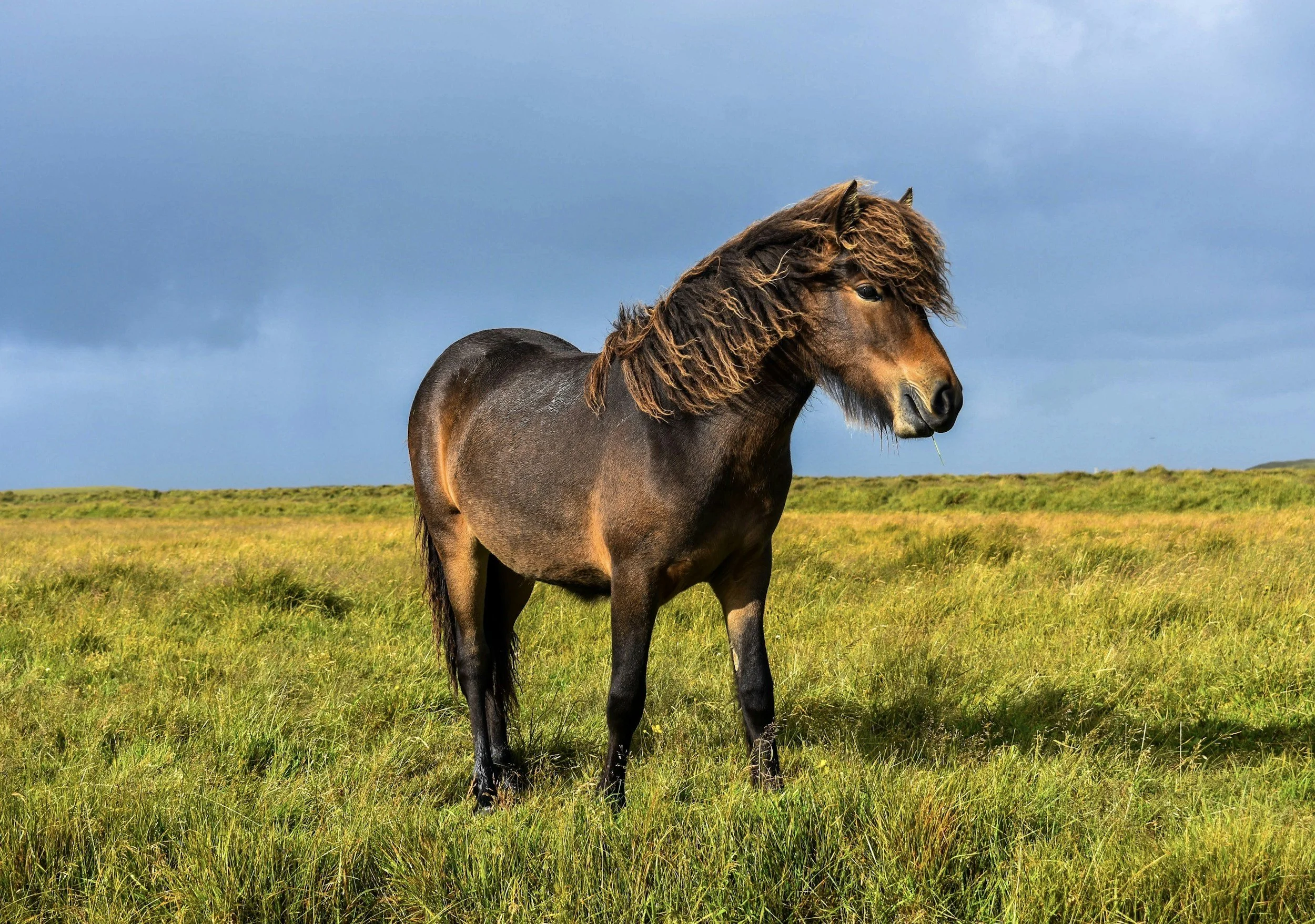
New Natural England contracts require significant reductions in grazing livestock. In a decision that contradicts the findings of their own commissioned review, which explicitly stated that ponies and cattle should not be linked for the calculation of stocking rates, the ponies have been included alongside sheep and cattle in the total numbers permitted. Commoners, who have stewarded these animals on the common grazing land for generations, will be forced to remove ponies to maximise the number of more commercially viable livestock they are permitted to keep. A petition of over one hundred thousand signatures has been largely ignored.
I am one of the local voices in the commission fighting for the herds.
But this essay is not primarily about the policy failure (though the policy failure is real, documented and urgent), this is about what is actually being lost - and why I believe it is the same thing being lost in every boardroom, every leadership team and every founder who arrives at my practice carrying something they cannot name.
What the herd grandmothers know
There is a particular kind of knowledge that cannot be written down.
Not occultic, secret or mystical, but one that lives in the body, in the relationship, in the accumulated practice of thousands of generations of encounter with a specific place. The Dartmoor Hill Ponies know where to find water in freezing temperatures when the surface of the moor has iced over, they know how to process gorse with their hooves when it is the only winter fodder available, they know how to read the subtle shifts in weather that come in off the Atlantic before any instrument has registered them, they know, in ways that no domestic horse could replicate, how to survive a Dartmoor winter.
This knowledge is not instinct in the simple sense. It is transmitted; from herd grandmother to grandchild, through proximity, through observation, through the accumulated intelligence of the herd as a living system. The foal does not learn where the water is from a manual, he learns by following the animals who have always known.
When the herds are gone, that knowledge is gone with them - and no rewilding programme, conservation initiative, or subsequent intervention will be able to reconstruct it.
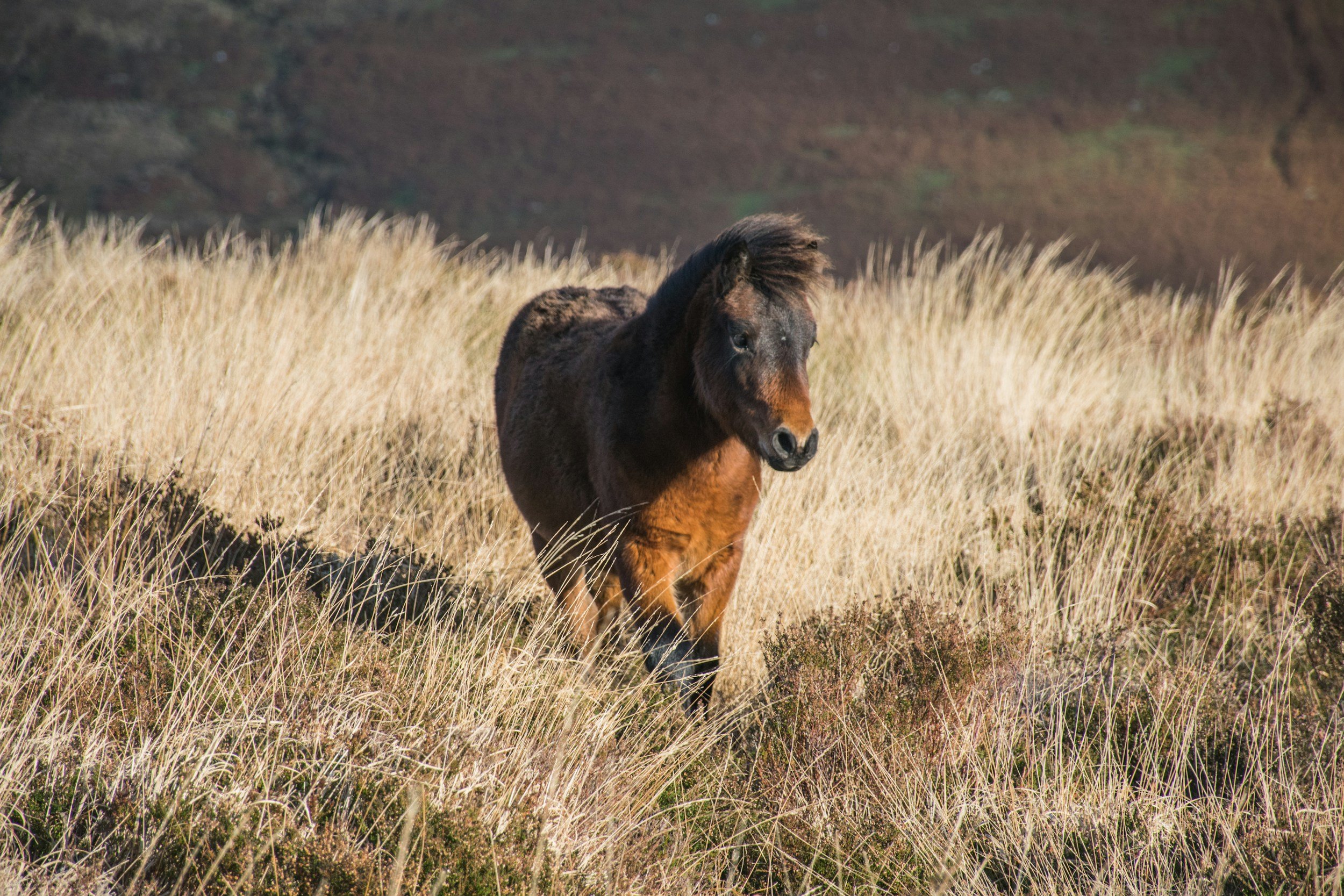
Secret intelligence
I work as a private advisor at the intersection of systemic leadership, somatic precision and equine-led diagnostics and the horses I work with are direct descendants of this lineage.
What I do, in practical terms, is this: I bring founders and senior leaders - people who have built significant things and find themselves at a threshold that the usual tools cannot help them cross - into direct encounter with the horses. What happens in that encounter is the most precise diagnostic I have encountered in twenty years of my work.
The horses do not respond to titles, they do not respond to track records, to the sophisticated composure a leader has spent decades perfecting, to the particular way of holding oneself in rooms full of people who are watching. They respond only to what is actually present in the nervous system; the gap between what is being presented and what is actually being carried. The bracing that has become so habitual the person no longer notices it is there.
In a single afternoon, the horses make visible what months of conventional advisory work may not reach.
What they surface consistently, across every client, regardless of industry or seniority or the scale of what they have built is a pattern. I don’t mean a personal failing, nor a mindset problem - a pattern encoded in the nervous system across generations*, running quietly beneath every significant decision, relationship and threshold. The inherited instruction about whether ease is permitted, whether visibility is safe, whether success is allowed to arrive without immediately being followed by loss.
*Research published in Nature in 2025 now confirms what systemic practitioners have long observed: these patterns are not metaphorical. They are biological. Epigenetic changes from significant ancestral experiences; war, scarcity, displacement, the particular pressure of not belonging, are measurably present in descendants three generations later, affecting the same neural pathways that govern emotional regulation, decision-making and the capacity for ease.
The pattern beneath the leadership ceiling is not personal in origin; it is inherited.
It is transmitted in exactly the same way that the herd grandmother's knowledge of where to find water is transmitted; not through language, or instruction, but through the nervous system, through the relational field, through the accumulated intelligence of the family system as a living, multigenerational organism.
The same forces
When I stand on the moor and watch what is happening to the Dartmoor Hill Ponies, I recognise it as a pattern I encounter every week in this work.
The same forces that are erasing the ponies are the forces I witness daily in the leadership work I do. The replacement of relational, embodied knowing with extractive metrics. The policy made at distance from the living system it governs, by people who have never stood in a field and watched a herd grandmother teach her grandchild where the water is. The reduction of complex, irreplaceable ecological intelligence to a line item in a stocking rate calculation.
Natural England is not evil and commoners are not villains - the individuals inside the system are, I have no doubt, doing what they genuinely believe is right. But, the system itself; the framework that governs their decisions, cannot see what the herd grandmother carries, because the herd grandmother's knowledge does not fit the framework's categories. It is not measurable, scalable, cannot be extracted, replicated or managed from a spreadsheet.
I see the same dynamic in every organisation I work with; the relational intelligence of the founder - the particular quality of reading a room, of knowing when something is off before anyone has said anything, of sensing the systemic pattern that is about to cost the company six months of progress - is not in any leadership development curriculum and cannot be replicated by a process, AI or a KPI. It lives in the person, transmitted through their nervous system, shaped by the accumulated intelligence of everything they have lived and observed and survived.
When that person leaves; when the founder exits, when the NED's term ends, when the leader who held the culture together moves on, that intelligence leaves with them and the organisation discovers, often too late, that what they lost was not a role on an org chart but a living system of knowing that had no formal name and left no forwarding address.
This is succession failure, most of the time. Not capability failure, but knowledge failure.
The same knowledge failure that is happening on Dartmoor.
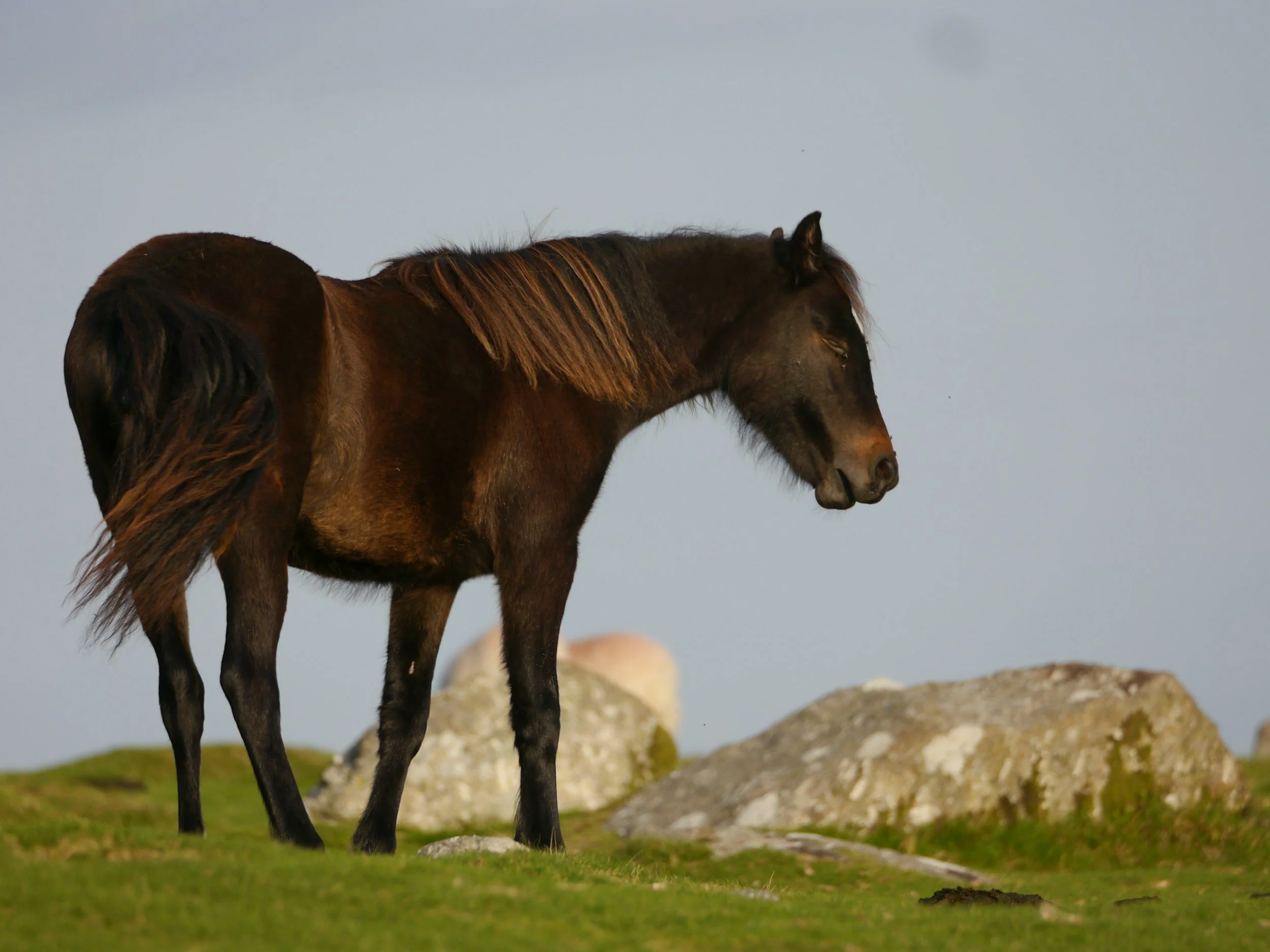
What right relationship looks like
The Dartmoor Hill Ponies do not need to be saved because they are beautiful, though they are.
They do not need to be saved because the moor looks better with them in it, though it does.
They need to be preserved because they are performing an irreplaceable ecological function that the landscape cannot perform without them and because they carry a form of intelligence that cannot be reconstructed once it is lost.
The same is true of the embodied, relational intelligence I work to recover in leaders. I am not arguing that leaders should be less strategic, less analytical, less capable of operating at the level of complexity that their roles demand. I am arguing that there is a layer beneath strategy; a nervous system capacity, a somatic knowing, a capacity for right relationship with the living system one is governing, that strategy cannot replace and that its absence is costing organisations and the people who lead them, far more than anyone is currently measuring.
What the horses offer, in a single afternoon, is a recalibration - a return to contact with the intelligence that lives below the mind. The most direct and precise route to seeing what is actually happening and moving it at the root.
The Dartmoor Hill Ponies offer the same thing to the moor.
The Dartmoor Field
Twice yearly, I run a full day on Dartmoor for founders, senior leaders and equestrians and Wednesday 16 September 2026 is the next date.
We work with the horses and spend time on the moor in direct witness of the wild ponies - in the weeks before the autumn roundup, when the urgency of what is at stake is immediate and visible.
The work of recovering embodied intelligence in leaders and the work of protecting embodied intelligence in a keystone species are, at root, the same work. I want the people who come to that day to feel that connection in their bodies, not just understand it in their minds. Join us here.